EN
EN

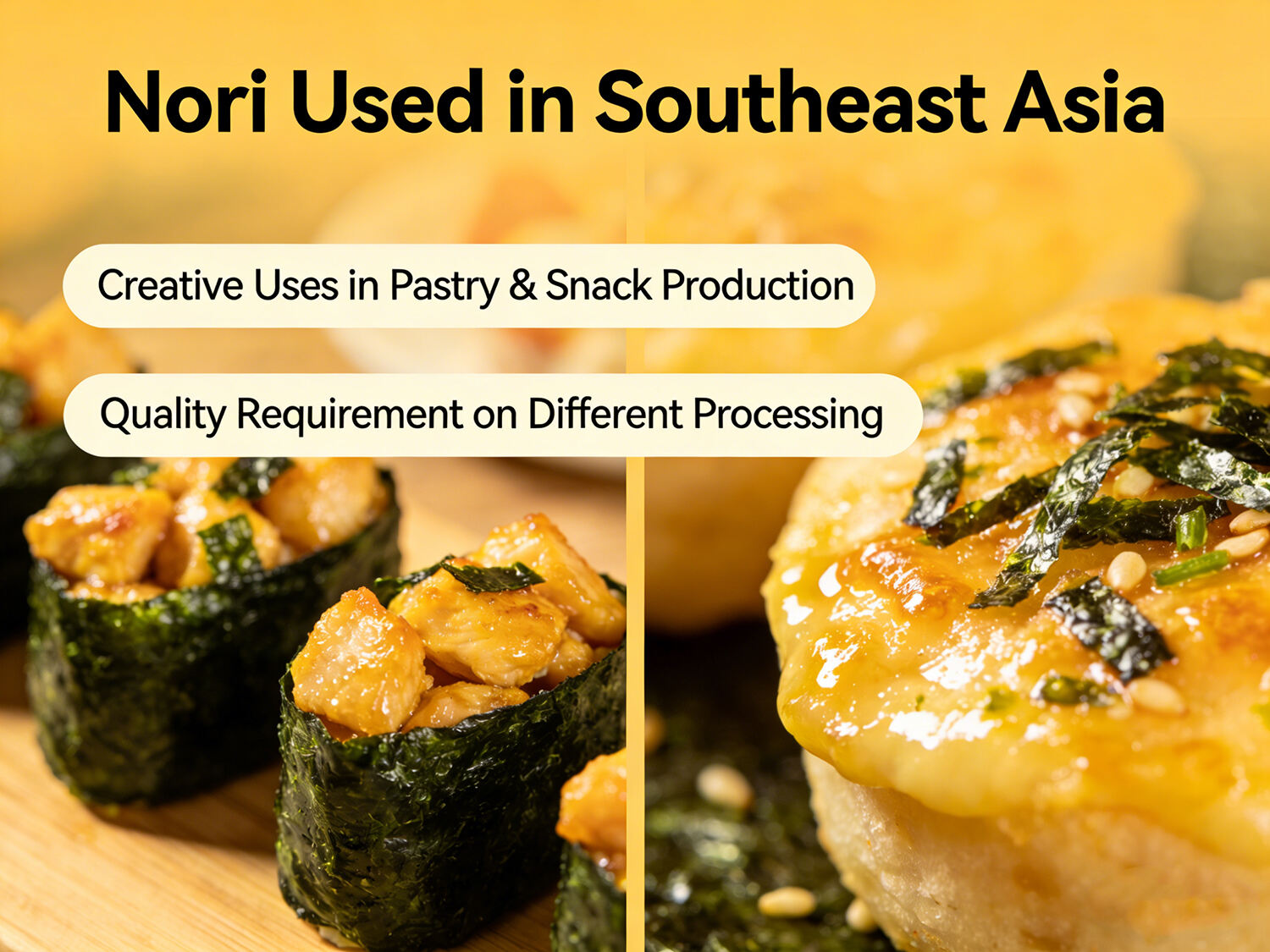
Vitambaa vya bahari vilivyochomwa, ambavyo mara nyingi huitwa nori, hutumika kwa upana mkubwa katika mchakato wa vyakula vya Asia kwa sababu ya ladha ya umami, ukuu wa kuvimba, na utambo wa rangi ya kijani nyekundu. kiingilio cha chakula kikubwa.
Kupakia dimsum
■Kupakia kuku uliopikwa
■ Kupakia soimai, mabolo ya samaki
■ Kupakia nyama mpya na kupikwa kwa mvuke
Zaidi ya zaidi ya kama kipakio , nori inaleta ladha ya kipekee, ukuvu, na thamani ya maoni kwa aina nyingi za mkate, vinywaji, na chakula kilichotayarishwa kwa matumizi moja kwa moja. Katika makala hii, tunasifu matumizi ya kibunifu ya nori katika uundaji wa mkate na mahitaji muhimu ya ubora kwa mchakato tofauti ya uzalishaji, yanayofaa kwa mahitaji ya wauzaji wa Kusini Mashariki ya Asia.
Matumizi Ya Uumbaji wa Nori Katika Uzalishaji wa Mafungu na Vituo vya Kula
Nori inaweza kuingizwa katika usindikaji wa chakula kwa njia nyingi: kama kifuniko, ingrediendi ya ladha, ongezo la kujaza, kufunua uso, na hata kama vituo vya kula vya kuvimba peke yake. Chini ni matumizi ya kisasa zaidi kwa uzalishaji wa viwanda na kibiashara.
1. Nori Kama Ingrediendi ya Kupikia (Mafungu, Vituo vya Kula, Biskuti, na Kuka)
Unguja wa nori na nori iliyovunjwa ni ongezo bora sana kwa vitu vilivyopikwa. Vyanafanya upungufu wa utamu, kuboresha umami, na kuzalisha umbo maalum wa kula kwa kusudi la kuvutia ladha za eneo husika.
Matumizi makubwa ni:
- Mafungu ya nori, vituo vya kula vya bahari, na vituo vya kula vya mchele
- Biskuti za sandwichi za nori na biskuti za sambari
- Kuka za kula kwa kusudi la kuvutia, muffini, na kuka za kuvimba zenye vifurushi vya nori
- Vituo vya juu ya pizza, vituo vya kula vya kusudi la kuvutia, na mafungu ya kienyeji
Kuongeza nori kunasaidia bidhaa kuzingatia katika soko la vituo vya kula la Asia ya Kusini-Mashariki linaloongozwa na uvamizi, hasa nchini Indonesia, Malaysia, Thailand, na Singapore.
2. Nori Kwa Vituo vya Kula vya Sandwichi vya Kuvimba (Bidhaa ya Kiasi Kikubwa)
Vikwazo vya nori vilivyopakwa kati ya vitu viwili ni moja ya aina za vyakula vya kucheza vilivyopendwa zaidi katika Asia ya Kusini Mashariki. Kwa kupakia kati ya vitu viwili vya nori vilivyochomwa, wazalishaji huzalisha bidhaa zenye uzito mdogo, kuvimba vizuri, na zenye uwezekano mkubwa wa kuuzwa.
Muundo huu unafaa kwa:
- Brandi za vyakula vya kucheza za kibinafsi
- Usambazaji wa maduka ya mikanda na maduka ya urahisi
- Mizani ya vyakula vya kucheza yenye saini ya Halal
3. Nori katika vyanzo na mafuta ya dim sum na vitu vya kula vinavyotokana na mafuta
Mafuta ya nori yanaweza kuchanganywa katika vyanzo ili kukuza umami ya samaki bila kudhoofisha ladha nyingine.
Inatumika kwa upana mkubwa katika:
- Vyanzo vya siomai
- Vyanzo vya mafuta na vyanzo vya mkate
- Mchanganyiko wa dim sum uliochafwa na kuchafwa kwa kutumia maji
- Mafuta ya chakula yenye mchanga na mafuta ya kuchuja
Kiasi kidogo cha nori kinaboresha kina cha ladha na hufanya dim sum ionekane bora zaidi.
4. Nori kwa Kupakia na Kufanya (Chaguo Lisilo Chafwa na Bora kwa Afya)
Pamoja na vipakio vya kawaida vya kuchafwa na kuchafwa kwa kutumia maji, nori ni bora sana kwa vitu vya mkate vya kisasa vinavyotumika kwa afya:
- Mkate wa mchele na onigiri
- Vipakio vya mboga na tufu kwa soko la wale wanaokula mboga tu
- Vipakio vya kuchafwa na vipakio vya mkate vya kisasa
- Mifumbo ya kuzingatia ubora kwa vyakula vya dim sum vya kisasa
Rangi yake asili pia inaboresha umbo la bidhaa kwa takwimu za chakula na kwa kufunika.
5. Mchuzi wa Nori wa Kusini Mashariki wa Asia ulioelezewa kwa eneo hilo
Ili kufaa na mapendeleo ya eneo hilo, nori inaweza kuungana na ladha za eneo hilo:
- Mchuzi wa nori wa mtindo wa Thai unaolenga uchafu na utamu
- Mkate wa orozoni wa nori wenye ladha ya nazi kwa mtindo wa Malaysia
- Mchuzi wa nori wa Indonesia unaolenga mchakato wa kula na vitabu vya nori
- Mchuzi wa dim sum kwa mtindo wa Singapore na mchakato wa nori wenye umami wa mfupi
Uwezo huu wa kubadilika unafanya nori kuwa nyenzo ya kuzalisha yenye uwezo mkubwa wa kubadilika kwa wazalishaji wa chakula.
Mahitaji ya Ubora wa Nori kwa Teknolojia tofauti za Kuzalisha
Utendaji wa nori unategemea sana ukuu wake, unyevu, nguvu ya kushinda na usafi wake. Chini yameorodheshwa viwango vya msingi kwa mchakato tofauti wa uzalishaji.
1. Kwa Kufunika (Siomai, Vitumbua vya Samaki, Kuku Kilichopikwa, Nyama Iliyochumwa)
- Usalama : Nyembamba, yenye uwezo wa kuzunguka, na haipaswi kuvunjika rahisi wakati wa kuzunguka
- Yaliyomo Maji : ≤5% ili kudumisha upepo wa kuvutia
- Safi : Ya kawaida au yenye chumvi kidogo tu, bila harufu ya samaki
- Sura : Iliyo nyeusi kibichi kwa usawa, bila mapanga, bila mchanga au vya zaidi vya uchafu
- Uwezo wa kupinga maji : Inabaki moja wakati inapovuta maji kidogo kutoka kwenye mikakati yake
2. Kwa kupika kwa mafuta (Mkakati uliopikwa, Tempura, Vyakula vya kuchemsha)
- Uwezo Mzuri wa Kupinga Joto : Haipiswi wala kubadilika kuwa na ladha ya moto juu ya joto la juu
- Uwepo mdogo wa kuvuta mafuta : Inadumisha upepo wa kuvutia baada ya kupikwa kwa mafuta
- Ushamba mzito hausimame wakati wa kupika kwa mafuta
- Bila chumvi au yenye chumvi kidogo tu kuzuia kuzidisha chumvi zaidi
3. Kwa kupikia (viazi vya mkate, vitumbua, keki)
- Ukanda wa nori 80–120 mesh, fini na sawa
- Vipande vya nori safi, kali, na yenye harufu nzuri
- Ustabiliti hausimame wakati wa kupikia
- Ufahamu bila nyuzi, viungo, au rangi za kisasa
4. Kwa Mchuzi wa Sandwich ya Nori yenye Uzito
- Uzito wa wastani : Hutoa msaada mzuri bila kuvunjika
- Safu ya kuvunjika : Inaboresha ufunguo na vitu vilivyopakwa ndani
- Uwasha mdogo : Kuzuia kuvimba au kuvunjika wakati wa uhifadhi
- Muda mrefu wa kuhifadhi : Inafaa kwa muhimu ya kikubwa na usambazaji
5. Viwadi vya Ubora (Kuongeza Mkoa wa Mashariki ya Kusini)
Kwa uuzaji nje na uzalishaji wa chakula nchini, nori lazima lijifunze mahitaji yafuatayo:
- Uthibitisho wa usalama wa kipimo cha chakula
- Uthibitisho wa Halal (muhimu sana kwa Malaysia, Indonesia, na Brunei)
- Yaliyomo ya metali nzito ya chini
- Hauna dawa za kudumisha au rangi za kisunufu
- Ukubwa unaofanana kwa ajili ya mistari ya uzalishaji ya kiotomatiki
- Muda mrefu wa kubaki kwa upakuzi wa vacuum
Kwa nini Nori ni Kitu CHA KIWAKILISHA kwa biashara za chakula katika Afrika ya Kusini Mashariki
- Inaongeza ladha kwa umami ya asili
- Inaboresha matokeo ya bidhaa na uwezo wake wa kushiriki katika soko
- Inasaidia kuweka mafanikio ya afya na kipindi cha kuchapishwa kwa wazi
- Inayoweza kubadilishwa kwa njia ya kupika kwa mafuta, kuvunjika, kuchemsha, na kujaribu moja kwa moja
- Inafanana na mwenendo wa Halal, mlo wa wanyama, na vitu vya kuchakua vya kisasa
Kwa makumbusho ya dim sum, maofisini ya mkate, wazalishaji wa vyakula vya kucheza, na misaada ya chakula na kunywa (F&B), kuchagua aina sahihi ya nori huathiri moja kwa moja ladha, muundo, asilimia ya upatikanaji, na uridhika wa wateja.
Hitimisho
Nori ni rasilimali yenye uwezo mkubwa sana ambayo huingia zaidi ya matumizi yake ya kawaida ya kufunika. Kutoka kwa vitu vya kuchemsha hadi vitu vya kuchakua vya kuvunjika, kutoka kwa mchanga wa dim sum hadi ladha za Kusini Mashariki za Afrika zinazopangwa kwa wakazi, inaongeza thamani kwa kila jamii ya chakula cha kuvutia.
Ili kufikia ubora wa mara kwa mara na uzalishaji wa wingi, biashara lazima chague bidhaa za nori zinazofanana na njia yao ya kuzalisha—kama vile kuchoma kwa mafuta, kuchoma kwa maji, kuchoma kwa joto la kuuza, au kupakia kati ya vitu viwili. Kwa kutumia nyenzo ya kwanza sahihi, wazalishaji wanaweza kutoa bidhaa mbunifu na zenye mauzo mengi zilizotengenezwa hasa kwa soko la Asia ya Kusini Mashariki.
Ikiwa unatafuta waraka wa nori au unga wa nori wenye ubora wa chakula, uthibitisho wa Halal, na uwezekano wa kufanya biashara kubwa na uzalishaji, kushirikiana na mtoaji wa kuaminika huleta uzalishaji wa mara kwa mara na utendaji mzuri wa soko.
Orodha ya Maudhui
-
Matumizi Ya Uumbaji wa Nori Katika Uzalishaji wa Mafungu na Vituo vya Kula
- 1. Nori Kama Ingrediendi ya Kupikia (Mafungu, Vituo vya Kula, Biskuti, na Kuka)
- 2. Nori Kwa Vituo vya Kula vya Sandwichi vya Kuvimba (Bidhaa ya Kiasi Kikubwa)
- 3. Nori katika vyanzo na mafuta ya dim sum na vitu vya kula vinavyotokana na mafuta
- 4. Nori kwa Kupakia na Kufanya (Chaguo Lisilo Chafwa na Bora kwa Afya)
- 5. Mchuzi wa Nori wa Kusini Mashariki wa Asia ulioelezewa kwa eneo hilo
-
Mahitaji ya Ubora wa Nori kwa Teknolojia tofauti za Kuzalisha
- 1. Kwa Kufunika (Siomai, Vitumbua vya Samaki, Kuku Kilichopikwa, Nyama Iliyochumwa)
- 2. Kwa kupika kwa mafuta (Mkakati uliopikwa, Tempura, Vyakula vya kuchemsha)
- 3. Kwa kupikia (viazi vya mkate, vitumbua, keki)
- 4. Kwa Mchuzi wa Sandwich ya Nori yenye Uzito
- 5. Viwadi vya Ubora (Kuongeza Mkoa wa Mashariki ya Kusini)
- Kwa nini Nori ni Kitu CHA KIWAKILISHA kwa biashara za chakula katika Afrika ya Kusini Mashariki
- Hitimisho